
FARMER REPORTS “UNUSUAL FEELING” AFTER MYSTERIOUS MARK APPEARS IN CROP FIELD IN RIO GRANDE DO SUL, BRAZIL; UFO RESEARCHER POINTS TO POSSIBLE CAUSE
By Fernanda Pires
Learn when the symbol appeared in the field and what researchers say about the case reported in Entre-Ijuís, a municipality in northwestern Rio Grande do Sul, Brazil.
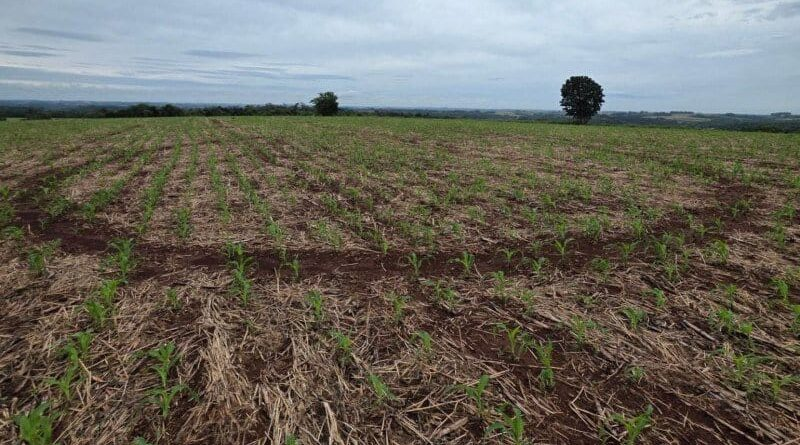
Jorge Fin, a 67-year-old farmer, was surprised to find an apparently perfect circle in a cornfield in Entre-Ijuís, in northwestern Rio Grande do Sul, Brazil.
“There is a great deal of positive energy here. People suddenly began coming to take a look. The crop is beautiful, and the place itself is beautiful,” said Fin, owner of Vinícola Fin, a winery in the municipality.
The case has sparked curiosity among local residents and people interested in unusual phenomena. However, UFO researcher Rafael Amorim, who investigates UFO-related cases, offered an assessment that differs from the farmer’s initial suspicion.
Amorim is also a consultant and presenter for the History Channel series Contatos Extraterrestres, Inexplicável, and Esquadrão UFO. Based on the available images and information, he believes the characteristics of the mark most likely indicate human activity.
Discovery and the farmer’s account
According to Fin, on the morning of October 9, he felt an unusual urge to walk through the field something he says is not typical for him.
“That day, it felt as though something was drawing me there,” he told ABCmais.
When he reached the central portion of the field, where the corn was taller, he found the circular pattern. “It was right in the middle of the field, where the corn is very tall,” he said.
Although surprised, Fin said he was not frightened. “I found it very strange, but it did not scare me. I was not worried about it.”
It was reportedly the first time a similar mark had appeared on the property. Fin initially dismissed the possibility that the symbol had been made by people. “I do not believe anyone could have done it. It is very strange and perfect,” he said.
UFO researcher Rafael Amorim’s observations
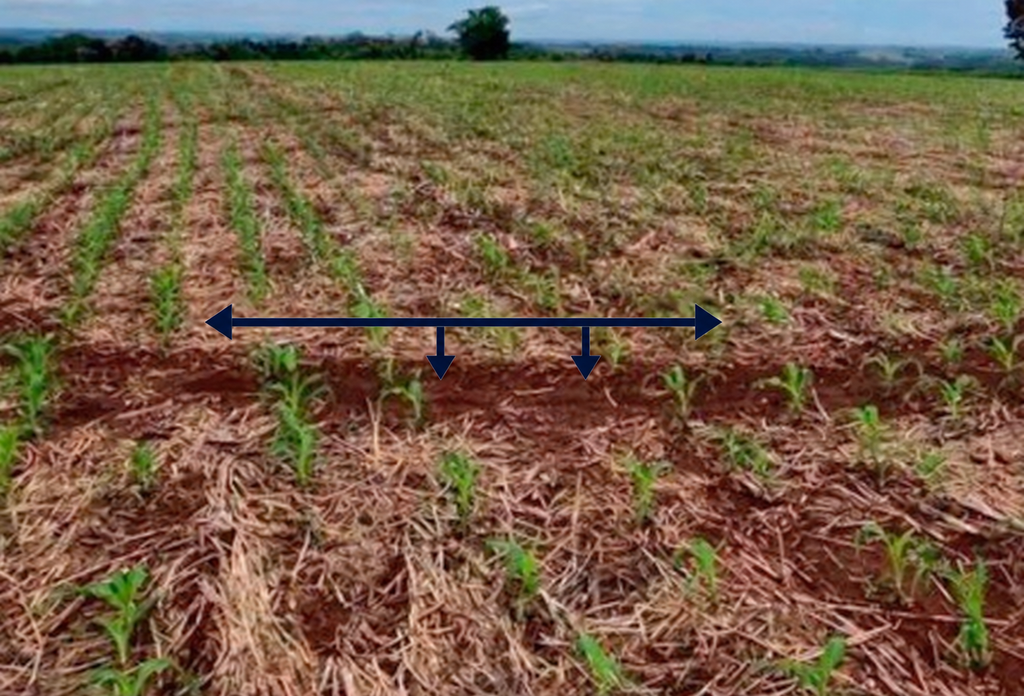
According to Rafael Amorim, the mark was likely created while the plants were still short. After examining the images, he observed that the plants within the area appeared otherwise undisturbed, suggesting that the circular design may have been made days before the farmer discovered it.
Fin also told the researchers who visited the site that he had not been to that particular area of the property a higher section of the terrain for several days.

Amorim adds that the images show signs consistent with the use of tools in creating the design. In his assessment, the mark does not display the characteristics normally associated with crop circles.
“My observation is that this is not a crop circle of non-human origin, based on the characteristics of such formations when compared with the mark found in the field. Nor does it resemble the UFO landing traces we are familiar with,” he said.
Crop circles and the human-origin hypothesis
Geometric formations in crop fields, commonly known as crop circles, have prompted debate for decades in many parts of the world. Some are attributed to human intervention, while others remain without a conclusive explanation particularly when they appear in remote areas or exhibit unusual features.
In southern Brazil, the municipality of Ipuaçu, in western Santa Catarina, has gained national attention for recurring reports of geometric patterns in crop fields. It is often referred to as the “Crop Circle Capital.” The case in Entre-Ijuís, however, differs from the more elaborate formations previously documented in the region.
According to Amorim, a key element of an investigation of this kind is the condition of the plants. In formations caused by external interference, for example, stalks may be bent or flattened rather than simply cut or removed.
“The plants are bent when there is external interference,” the researcher explained.
The Ufologia Missioneira Group also reviewed the case and concluded that human activity is the most likely explanation, based on the characteristics of the mark.
Fungus hypothesis ruled out
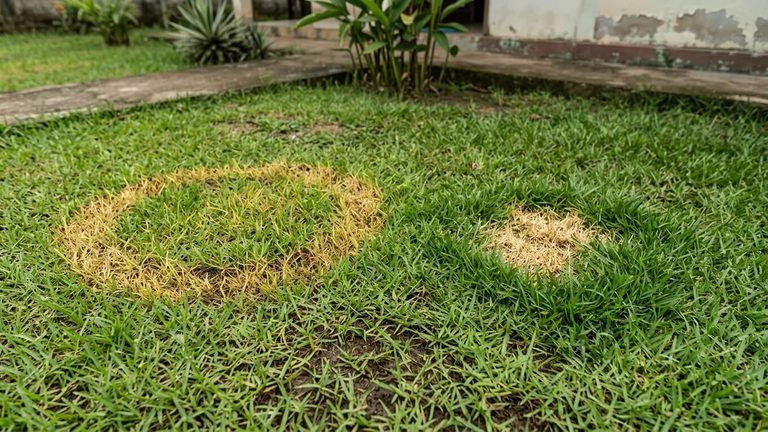
The possibility that the formation had been caused by the fungus Rhizoctonia solani was also considered and ruled out by Itiberê, a researcher, member of the Ufologia Missioneira Group, and a member of Rafael Amorim’s team.
“The fungus does not form rings like this one. It usually causes the plants to take on a scorched appearance,” Amorim explained, referring to his colleague’s assessment.
After reviewing the available images and considering the information gathered, Amorim said human activity remains the most likely explanation.
“What we observed in this case was most likely human activity,” he told ABCmais. “We are not completely dismissing the mystery, but that is the conclusion we reached based on a remote assessment.”
The analysis, however, remains preliminary. A definitive conclusion would require an on-site investigation, including a detailed examination of the plants and soil, possible access routes, and any other physical evidence that could help determine how the mark was formed.
For now, the symbol found in the field in Rio Grande do Sul, Brazil, continues to generate curiosity. Although a connection to an unidentified flying object, or UFO, appears less likely according to the researchers’ initial assessment, the incident remains another account of an unusual mark found in a Brazilian crop field.