TRUMP, IT’S TIME TO UNLOCK THE TRUTH ABOUT UAPs
After ordering the release of government files on Unidentified Anomalous Phenomena, pressure is growing for President Donald Trump to take the next step: ensuring effective protections for whistleblowers who claim to possess sensitive information about UAPs and possible secret programs.
For decades, the subject of unidentified flying objects – now officially referred to as Unidentified Anomalous Phenomena (UAPs) – has remained caught between government secrecy, scientific stigma, national security interests, and an ongoing debate over what may actually be hidden from the public.
In 2026, however, something changed.
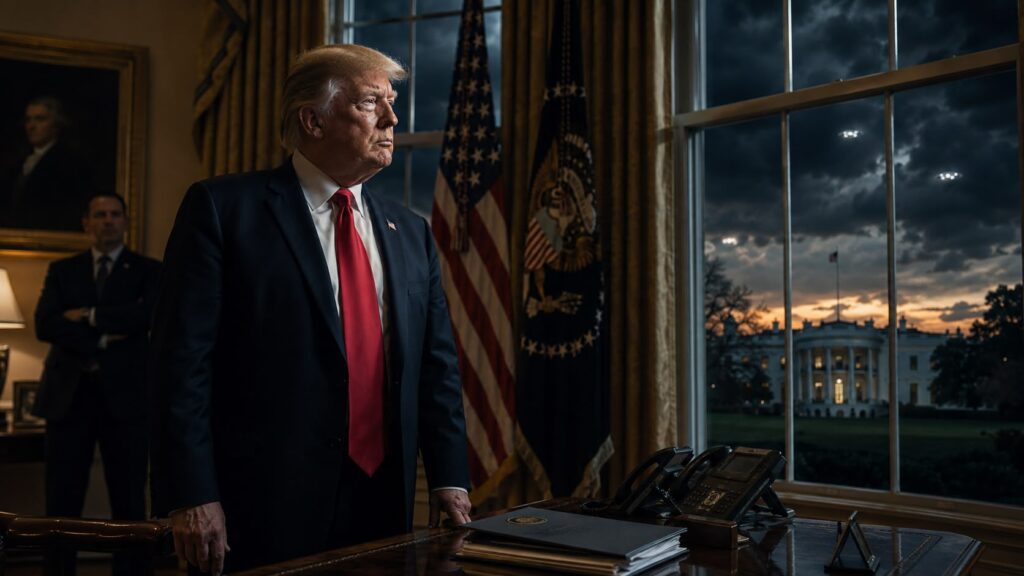
On February 19, President of the United States Donald J. Trump announced that he would direct the Secretary of War and other federal agencies to begin a process aimed at identifying and releasing government files related to extraterrestrial life, UAPs, UFOs, and other information associated with the subject. The directive triggered an interagency effort involving, among others, the Department of War, the Office of the Director of National Intelligence (ODNI), AARO, NASA, the FBI, and the Department of Energy. (U.S. Department of War)
Thus was born the Presidential Unsealing and Reporting System for UAP Encounters – PURSUE, an initiative created to locate, review, declassify, and make public historical UAP records held by the federal government.
The releases began quickly. The first occurred on May 8, 2026, followed by additional batches on May 22, June 12, July 10, and, most recently, August 7, 2026. The government itself states that the process involves dozens of agencies and the review of tens of millions of records accumulated over decades. (war.gov)
It is a historic step forward.
But perhaps the documents are only half of the story.
WHAT ABOUT THE PEOPLE WHO KNOW ABOUT THE PROGRAMS?
Files can reveal memoranda, images, videos, technical reports, and administrative decisions. But documents do not always explain how an organizational structure operated, who made particular decisions, what information was shared internally, or which programs may have operated under extraordinary levels of compartmentalization.
For that, witnesses are needed.
Military personnel, members of the intelligence community, federal employees, scientists, pilots, technicians, and contractors who may have participated in or gained direct knowledge of programs related to the phenomenon could possess information that cannot be reconstructed from documents alone.
It is precisely at this point that a new movement is emerging within the Disclosure community: if the government is truly willing to pursue the truth, it must ensure that those who possess information can present it without putting their entire professional lives at risk.
The argument is simple: documentary transparency without testimonial transparency may leave important gaps.
PROTECTIONS ALREADY EXIST – BUT THE QUESTION IS HOW FAR THEY GO
An important distinction must be made.
It would not be accurate to say that there are currently no mechanisms protecting individuals who wish to report information related to UAPs.
U.S. law has already created a specific pathway.
The All-domain Anomaly Resolution Office (AARO) currently accepts reports from current and former U.S. government employees, military personnel, and contractors who have direct knowledge of government programs or activities related to UAPs dating back to 1945. According to AARO, the office can receive classified information at all levels, including information subject to special access controls or highly compartmentalized programs. (AARO)
Legislation enacted through the Fiscal Year 2023 National Defense Authorization Act also provides that an authorized disclosure concerning UAPs cannot be prevented by nondisclosure agreements and establishes protections against retaliation for individuals who use these lawful reporting channels. (AARO)
That is significant.
However, making an authorized disclosure to a government institution is not the same as having unrestricted authorization to publicly release classified information.
It is precisely within this distinction that part of the current debate lies.
For advocates of a new presidential initiative, an even clearer and more robust mechanism would be necessary – one capable of ensuring that individuals with legitimate knowledge can present evidence to the appropriate authorities, Congress, or specially designated bodies without fearing the loss of their careers, security clearances, or other forms of retaliation.
COULD THE NEXT STEP COME FROM THE WHITE HOUSE?
One proposal now circulating on social media calls specifically for an Executive Order dedicated to protecting UAP-related whistleblowers.
The idea carries political weight, but it must be understood with legal precision.
The U.S. president has broad authority over the classification system for national security information within the Executive Branch. Executive Order 13526, which establishes much of the current framework for classification and declassification, sets out procedures for determining when information may or should cease to remain classified. (National Archives)
Trump has already demonstrated his willingness to use that authority by ordering the review and release of records through PURSUE. (war.gov)
A new Executive Order could therefore strengthen anti-retaliation procedures, accelerate classification reviews, require cooperation among agencies, and establish special channels for testimony related to UAPs.
But an Executive Order does not supersede laws enacted by Congress. Certain categories of information are governed by specific statutory regimes – including some nuclear information protected under the Atomic Energy Act – and cannot simply be released in the same manner as information classified solely under executive authority. (National Archives)
For that reason, a truly comprehensive policy would likely require coordination among the White House, Congress, Department of Justice, intelligence community, and national security agencies.
Even so, a presidential decision could dramatically change the institutional environment.
UAP DOES NOT AUTOMATICALLY MEAN NHI
There is another fundamental distinction.
Investigating UAPs does not mean concluding in advance that these phenomena represent extraterrestrial technology or Non-Human Intelligence – NHI.
To date, AARO’s public position is that the Department has found no verified evidence of extraterrestrial technology. NASA likewise states that it has no credible evidence that UAPs are extraterrestrial in origin. (AARO)
That, however, does not end the investigation.
The very existence of cases officially classified as unresolved demonstrates that there are incidents for which the available data still do not permit a definitive determination. The Department of War explicitly states that materials released through PURSUE include unresolved cases and invites independent researchers to examine the records made available. (war.gov)
The difference between science and belief lies precisely here: not declaring something proven before it has been demonstrated – but also not abandoning an investigation simply because the answer is not yet known.
THE RIGHT TO KNOW – AND THE DUTY TO PROTECT
If there are individuals with direct knowledge of programs, operations, or materials related to UAPs, that information should be examined.
Not because every allegation will necessarily be true.
Not because every witness will necessarily possess the answer.
And certainly not because UAP is automatically synonymous with non-human intelligence.
But because a democratic society must have mechanisms capable of investigating extraordinary claims with independence, security, and rigor.
The true purpose of a whistleblower protection policy should not be to ensure that one particular narrative prevails.
It should be to ensure that no narrative is silenced by fear before its evidence can be examined.
Witnesses who provide truthful information must be protected.
Witnesses who provide mistaken information must have their claims evaluated objectively.
Documents must be authenticated.
Sensor data must be preserved.
Programs must be auditable.
Extraordinary claims must face extraordinarily rigorous investigation.
That is how we arrive at the truth.
PRESIDENT TRUMP, THE FILES HAVE BEEN OPENED. NOW THE WITNESSES MUST BE HEARD.
Donald Trump has already taken a step that previous presidents avoided: he ordered a broad government process to identify and disclose documents related to UAPs.
PURSUE has placed thousands of pages, images, videos, and records before the public and promises to continue releasing additional material as it is located, reviewed, and declassified. (U.S. Department of War)
Now an unavoidable question arises:
What about those who claim to know the story from the inside?
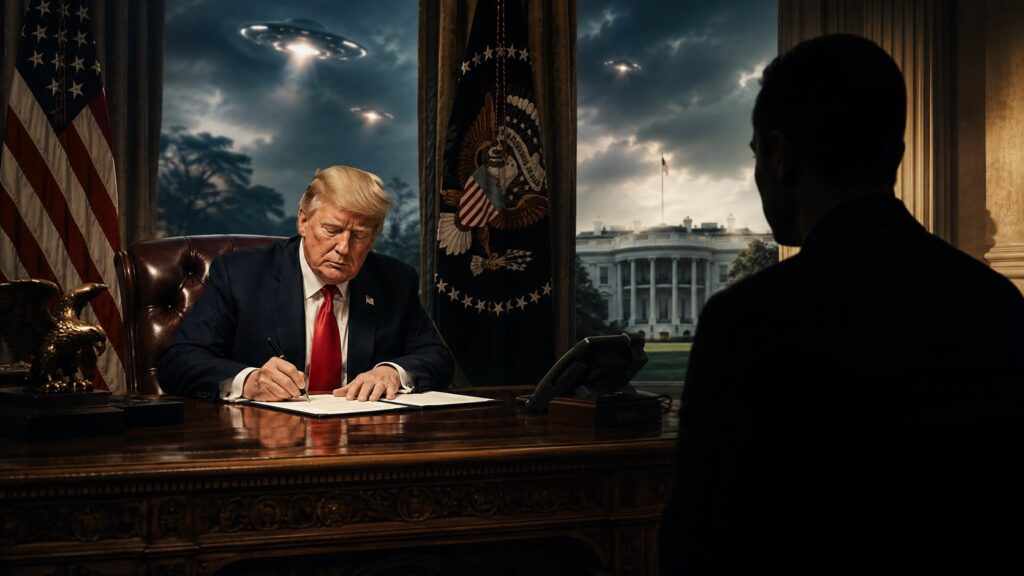
If military personnel, intelligence officers, scientists, government employees, or contractors possess legitimate information still unknown to Congress and the public, they need a safe pathway to present it.
Without intimidation.
Without retaliation.
Without the fear of losing a career built over decades simply for using a lawful mechanism to inform the government about what they witnessed.
A new Executive Order, accompanied where necessary by legislation from Congress, could establish even clearer protocols for protection, testimony, classification review, and independent investigation.
The UAP issue has reached a point where simply asking whether “they exist” is no longer enough.
Now we must ask:
What data exist? Who possesses them? Who has had access to them? What can be demonstrated? And why has certain information remained classified for so long?
Opening the files was one step.
Protecting those who may be able to explain what lies within them could be the next.
If the stated goal is transparency, then releasing the documents is not enough.
The facts must be set free.
And the truth – whatever it may ultimately prove to be – must be allowed to survive the test of evidence.
Sources: https://cife.ca/trump-e-hora-de-libertar-a-verdade-sobre-os-uaps/