
USO Routes : Are UFOs Hiding in the Ocean?
By Fernanda Pires
When people hear the word “UFO,” they usually look up. But what if some of the most mysterious sightings aren’t in the sky at all – what if they’re happening underwater?
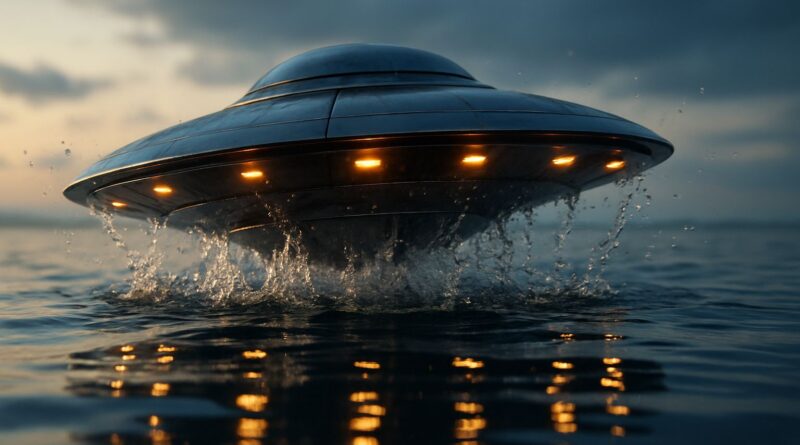
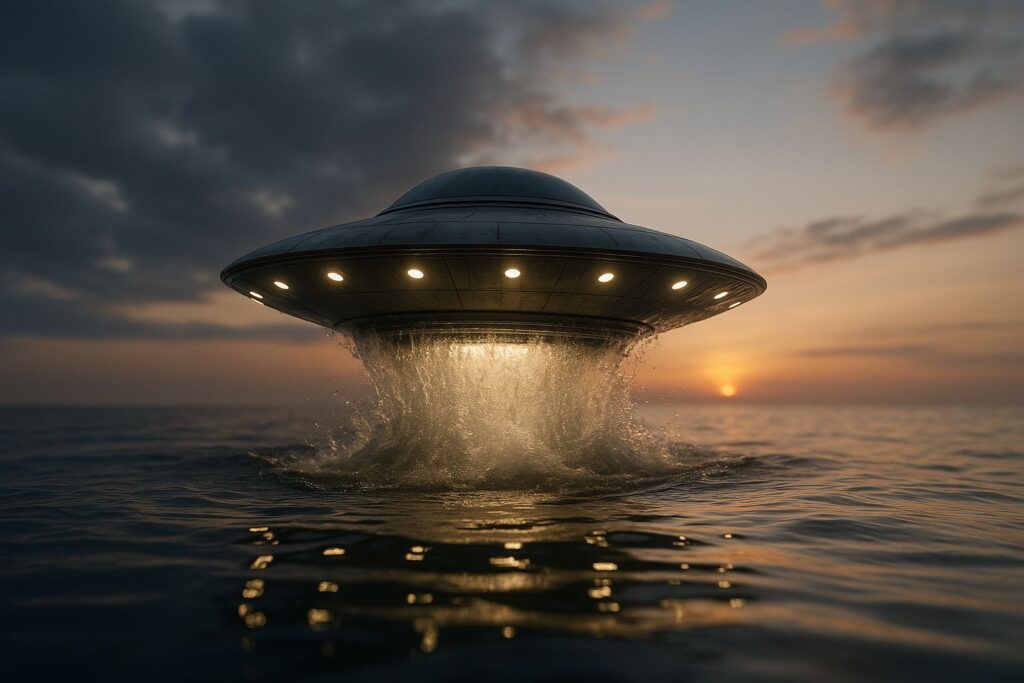
Reports of USOs (Unidentified Submerged Objects) describe craft that skim the surface, plunge into the sea, and sometimes re-emerge as if nothing changed. Famous cases like the 2004 Nimitz “Tic Tac” encounter, Puerto Rico’s 2013 Aguadilla thermal video, and Canada’s 1967 Shag Harbour incident all include a striking detail: the ocean was involved.
So why the water? And if these events are real, where would these “USO highways” most likely run?
Why the Ocean Works as a Hiding Place
The ocean is a perfect cover for anything or anyone trying to move undetected:
*Stealth: Water swallows radar and light, muffles sound, and hides movement.
*Sensor gaps: Most global surveillance is pointed at the skies, not the sea. The Navy’s hydrophone networks only cover limited areas and much of the data is classified.
*Empty space: Vast stretches of ocean are dark, unmonitored, and nearly devoid of people.
From a scientific perspective, this makes the sea a “blind spot” in Earth’s sensor network.
Famous USO Encounters
*Nimitz “Tic Tac,” 2004 – Navy pilots saw a smooth, wingless object over a patch of “churning” ocean.
*Aguadilla, Puerto Rico, 2013 – A thermal video showed an object dipping into the water, then splitting in two.
*Shag Harbour, Nova Scotia, 1967 – Witnesses saw a glowing craft sink into the sea. Divers found nothing.
*California Training Ranges, 2019 – Navy ships logged swarms of unidentified craft in air/sea test zones.
These reports don’t prove aliens, but they do show a pattern of water interaction that deserves more study.
Possible “USO Highways”
Looking at ocean depth, shipping routes, and sensor coverage, certain regions stand out as natural corridors:
*Deep coastal trenches like the Puerto Rico Trench or Monterey Submarine Canyon, which sit next to busy air and sea lanes.
*Cable hubs where undersea internet lines converge – crowded with survey ships and underwater noise that could mask anomalies.
*Military ranges where sensors are dense, but so are drones, flares, and secret tests that confuse analysis.
Are We Missing the Evidence?
Science warns us to be careful: lights on the horizon, mis-focused cameras, or classified military projects can all create false impressions. NASA and the Pentagon’s AARO have both admitted a core issue: our data are fragmented, inconsistent, and often hidden behind secrecy.
For proof of a true USO, researchers would need synchronized radar, video, infrared, and acoustic data- plus unedited raw files. Until then, uncertainty rules.
Citizen Science at Sea
With smartphones everywhere, the public can help fill the gaps. If you live near the coast or work on ships:
*Record a steady 10–30 seconds with landmarks and horizon.
*Note GPS, time, tide, and nearby traffic.
*Share raw files with research groups like MUFON or other recognized research groups.
Even one clear, multi-angle recording could change the debate.
Conclusion
The idea of “USO highways” may sound like science fiction, but the reasoning is simple: the ocean is vast, under-monitored, and offers perfect cover. Whether USOs turn out to be secret tech, misunderstood natural events, or something stranger, one fact is clear – the ocean still hides secrets we’ve barely begun to explore.