
THE NIGHT CASIMIRO DE ABREU AWAITED A FLYING SAUCER
Fernanda Pires
The strange 1980 case that gathered hundreds of people expecting extraterrestrial contact
By Thiago Ticchetti
At the beginning of the 1980s, Brazil was experiencing a period of intense UFO-related activity. Operation Saucer (Operação Prato), which took place in the Amazon in 1977, was still resonating among researchers and enthusiasts, with reports of mysterious lights attacking residents of small river communities. Just a few years later, in 1986, the country would witness the Official Night of UFOs, when Brazilian Air Force jets chased unidentified flying objects in national airspace.
It was in this context of widespread fascination with flying saucers that the quiet town of Casimiro de Abreu, in the countryside of Rio de Janeiro, gained national attention for an unusual episode: hundreds of people gathered to await the arrival of an extraterrestrial spacecraft at a scheduled date and time.
The Telepathic Message and the Promise of a Landing
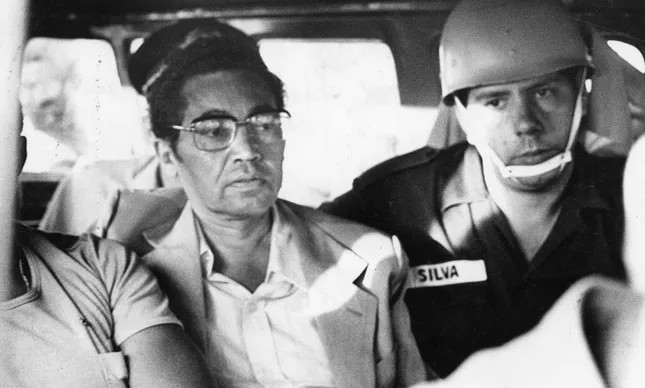
The case began when a supposed contactee, identified as José de Aguiar, claimed to have received telepathic messages from beings from other worlds. According to him, these peaceful visitors had promised to land their spacecraft in an open field in the city for open contact with humans.
The news quickly took on the air of prophecy. According to reports from the time, Aguiar was known in the town as a reserved person with an interest in esoteric subjects. He said the message was clear: on a specific night in 1980, a spaceship would land before everyone, bringing “cosmic brothers” to deliver messages of peace and spiritual evolution.
The Public Mobilization
In just a few days, the story spread through the regional press. Small newspapers and local radio stations reported on the supposed extraterrestrial visit, and soon reporters from larger outlets, including newspapers from Rio de Janeiro, were sent to cover the event.
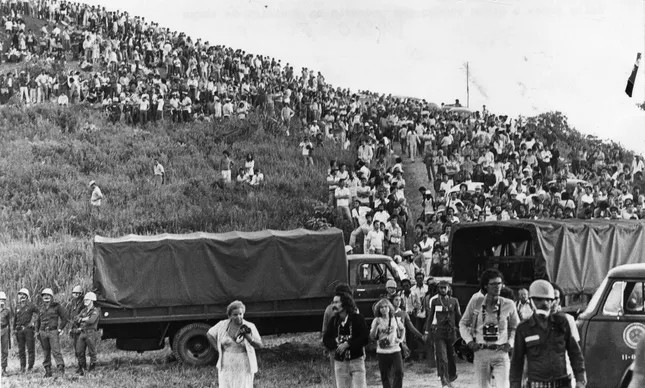
As the date approached, the town entered a festive and expectant mood. Residents from nearby regions began to arrive, many camping out at the designated landing site. Local merchants saw a boost in sales, offering food and drinks to the visitors.
Some amateur ufologists, fascinated by the possibility of public contact, brought along photographic equipment and improvised telescopes, hoping to capture the historic moment.
The Night of Expectation
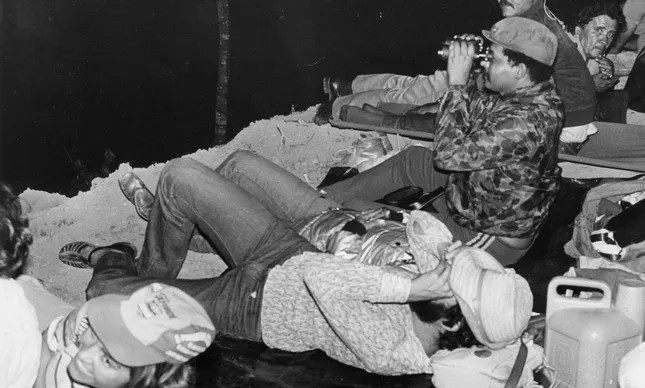
On the appointed night, hundreds of people gathered in a wide open area, under a clear and starry sky. Witnesses reported that around 9 PM, some strange lights appeared on the horizon.
“I saw a glowing point moving differently from an airplane. We got very excited, thinking the ship was arriving,” said Paulo César Fernandes years later, one of those present that night.
Others reported seeing small blinking lights in the sky, which further heightened the public’s excitement. Some began to pray, while others shouted welcoming messages to the “space brothers.”
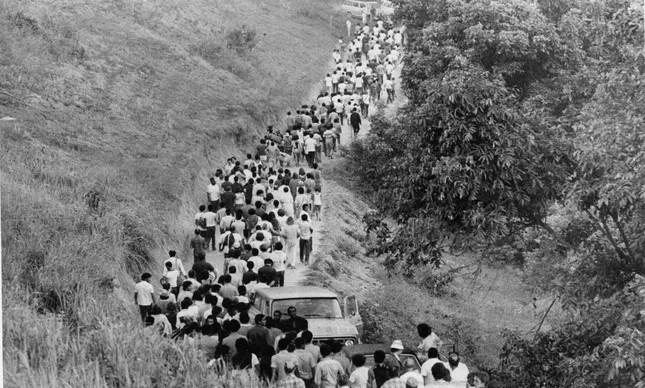
But the much-anticipated ship never landed. The hours passed, and by midnight, people began to leave the site, disappointed, though not entirely without hope.
National Repercussions
The case made headlines in several Brazilian newspapers. Some reports treated the episode with irony, calling it “the night of the phantom flying saucer.” Others, however, focused on the human side of the story: the faith and hope of making contact with beings from other worlds.
The supposed contactee, José de Aguiar, avoided interviews after the incident. In one of the rare statements he gave, he claimed that “the extraterrestrials were present but changed their minds about landing due to the excessive crowd of onlookers.”
For more skeptical ufologists, the episode was a classic case of mass hysteria, amplified by a historical context in which UFOs frequently appeared in the headlines.
A Recurring Social Phenomenon
Cases of scheduled contact with alleged extraterrestrials are not exclusive to Casimiro de Abreu. Throughout history, prophets and contactees from around the world have promised specific dates for encounters with beings from other planets.
One of the best-known examples occurred in the United States in 1954, when Dorothy Martin, leader of a spiritualist group, announced that the world would end in a great flood — but that extraterrestrials would rescue her followers. The prophecy failed, but the episode was later studied by social psychologists, who observed the phenomenon of cognitive dissonance: instead of abandoning their belief, many followers strengthened their faith even further.
Casimiro de Abreu, therefore, was not an isolated case, but part of a broader phenomenon involving belief, expectation, and the eternal human hope of not being alone in the universe.
The Brazilian UFO Context of the 70s and 80s
Brazil, especially in the 1970s and 1980s, was a hotspot for sightings and reports of UFO contact. The country was home to one of the world’s largest ufology communities, with magazines, research groups, and radio programs dedicated to the topic.
Operation Saucer, conducted by the Brazilian Air Force in the Amazon, officially investigated phenomena that were terrorizing riverine communities. Military documents declassified years later confirmed that officers recorded lights and unidentified objects, reinforcing the sense that Brazil was central to the UFO phenomenon.
Within this context, it wasn’t uncommon for stories of scheduled contact to gain notoriety, especially in small towns, where word of mouth had great mobilizing power.
Testimonies and Memories from the Time
Some residents of Casimiro de Abreu still remember that night fondly — and even with a bit of embarrassment.
“I was a kid, I remember going with my parents to the field where the saucer was supposed to land. People were selling pastries, soda — it felt like a party. When the ship didn’t come, there was disappointment, but no one fought; it seemed like everyone wanted to believe,” recalls Maria Helena dos Santos, now in her 60s.
Another resident, Ronaldo Peixoto, still believes something happened that night:
“I don’t know if it was a ship or not, but those lights we saw weren’t airplanes or stars. I still think they were there, they just didn’t want to show themselves.”
Military Involvement in the Casimiro de Abreu UFO Incident
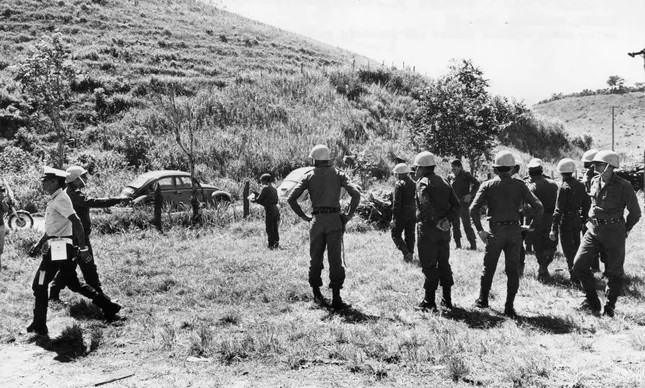
The involvement of military forces in the alleged UFO landing in Casimiro de Abreu, Brazil, in 1980, was discreet but notable. Although there are no official records of a large-scale military operation — such as those seen in other major Brazilian UFO cases like Operation Saucer or the Official UFO Night — it is known that military police officers were present at the scene on the day the event was supposed to occur.
Due to the growing crowd, the Military Police of the State of Rio de Janeiro was called in to ensure order and safety.
Crowd Control and Safety Concerns
With the presence of a large number of civilians, including children, families, journalists, and ufologists, the military police were tasked with crowd control. There was concern over potential accidents on the steep terrain or possible panic if an unusual phenomenon were to occur. Patrol cars and uniformed officers were spotted throughout the area, overseeing the situation.
Observation Without Intervention
According to witnesses, the police observed both the crowd and the skies carefully but did not intervene or prevent civilians from remaining on the hill. Their role appeared to be limited to surveillance and ensuring public safety, without engaging directly with the alleged UFO phenomenon.
No Known Official Investigation
Unlike other landmark UFO cases in Brazil, there is no evidence that the Brazilian Army, Air Force, or intelligence services conducted any formal investigation into the Casimiro de Abreu incident. The case remained largely in the realm of popular culture and media curiosity rather than institutional concern or secrecy.
The military’s involvement in the Casimiro de Abreu UFO case was primarily operational and precautionary, focused on maintaining public order rather than investigating the alleged extraterrestrial contact. Nonetheless, their presence highlights the scale and seriousness with which the event was regarded by local authorities, as hundreds gathered in anticipation of a possible otherworldly encounter.
Lessons and Legacy for Ufology
The case of Casimiro de Abreu entered the Brazilian ufology folklore as an example of collective mobilization around the UFO phenomenon, but also as a warning about the importance of serious investigation.
Episodes like this show that the expectation of extraterrestrial contact is part of a deep human longing, blending hope, faith, and curiosity about our place in the cosmos. At the same time, they highlight the risks of false promises, which can undermine the credibility of UFO research.
Even without concrete evidence, the episode is still remembered today in conferences and specialized publications, demonstrating how ufology is also a cultural phenomenon capable of shaping beliefs and behaviors.
More than 40 years later, the night when Casimiro de Abreu awaited a flying saucer remains a curious, amusing, and in some ways touching story. It reveals that, despite the disappointments, the desire for contact with cosmic intelligences remains alive in the human heart.
Perhaps someday, the promise made that night will come true — and not only in Casimiro de Abreu, but for all humanity.
Who as José de Aguiar?
José de Aguiar was a resident of Casimiro de Abreu, a small town in the state of Rio de Janeiro, Brazil, who became known in Brazilian ufology in the early 1980s. He claimed to have maintained telepathic contact with extraterrestrial beings, who, according to him, transmitted a clear message: a flying saucer would land at a specific location in the town on a set date and time.
José de Aguiar remained a controversial figure. Some saw him as a genuine contactee, someone who had truly received a message from otherworldly beings. Others viewed him as a visionary or a simple man influenced by the UFO craze of the time.
Regardless of the truth behind his claims, the incident helped establish Casimiro de Abreu as a point of interest on Brazil’s ufological map. The event is often remembered as “the night the town waited for a flying saucer.”
Image subtitles:
1 The ‘alien spokesman’ escorted by police after the flying saucer’s absence
2 The hillside near the ‘landing field’ is packed with people ready to see aliens
3 The crowd leaves frustrated after realizing the Jupiterians wouldn’t come
4 People keep vigil overnight, waiting for the Jupiter spacecraft
5 Police officers secure the ‘landing field’ on the farm that would host the flying saucer